
A variety of methods and approaches to praying with Sacred Scripture. Each one offers a different way of listening to the Word of God, reflecting on its message and allowing it to nourish and deepen your life of prayer.
- The Four Senses of Scripture
- Lectio Divina
- The Eastern Tradition of Praying with Scripture
- Praying the Scripture in the Jewish Tradition
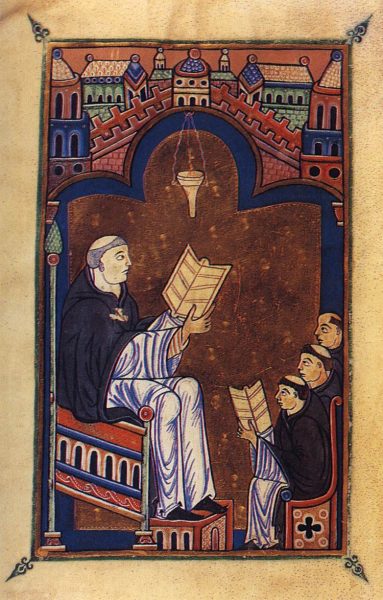
Hugh of Saint-Victor presents Scripture as a text with multiple layers of meaning, not only one. In this approach, the reader begins with the historical or literal sense, which asks what the text says in its own narrative context, and then moves to the spiritual senses, which unfold the text’s deeper theological significance. Hugh’s way of reading belongs to the medieval tradition of the four senses of Scripture: historical, allegorical, anagogical and moral.
The historical sense is the first step in reading Scripture. It looks at the plain story, the words used, the people involved, and the situation behind the passage. In other words, it asks: What happened? Who was involved? What did the text mean then?
Some examples
- In John 4, Jesus speaks with the Samaritan woman at the well. The historical sense notices the real Jewish-Samaritan tension and the ordinary setting of a water well.
- In Exodus 3, Moses meets God in the burning bush. The historical sense reads this as God’s call to Moses in the context of Israel’s slavery in Egypt.
- In Luke 2, the birth of Jesus is placed under Caesar Augustus. The historical sense pays attention to the Roman setting and the census background.
The allegorical sense does not stop at the story itself. It looks at how the same event can point beyond itself to Christ, his work, and the life of the Church. In this way, the Old Testament especially is read as preparing for the New Testament.
Some Examples
- The crossing of the Red Sea can be read as a sign of Christ’s victory and of baptism.
- The Passover lamb can be seen as pointing to Christ, the true Lamb of God.
- Noah’s ark can be read as a figure of the Church, which saves and carries believers through judgment.
- Adam and Eve can be read as a mystery of Christ and the Church, especially in the union of bridegroom and bride.
The anagogical sense reads Scripture in light of our ultimate destiny. It shows how biblical events and images point beyond this world to heaven, the new creation, and full union with God.
Some Examples
- The crossing of the sea can suggest the journey from this life to glory.
- The heavenly Jerusalem can be read as the final home of God’s people.
- The Promised Land can point to the believer’s eternal rest in God.
The moral sense does not stop at explaining what happened in the biblical story. It asks what the story means for Christian living now. In this sense, Scripture becomes instruction for how to live justly, love rightly, and follow Christ faithfully.
Some Examples
- Israel’s journey in the desert can warn believers against unbelief and disobedience, and encourage perseverance.
- The Good Samaritan teaches mercy and practical compassion.
- The Sermon on the Mount shapes humility, purity of heart, and forgiveness.
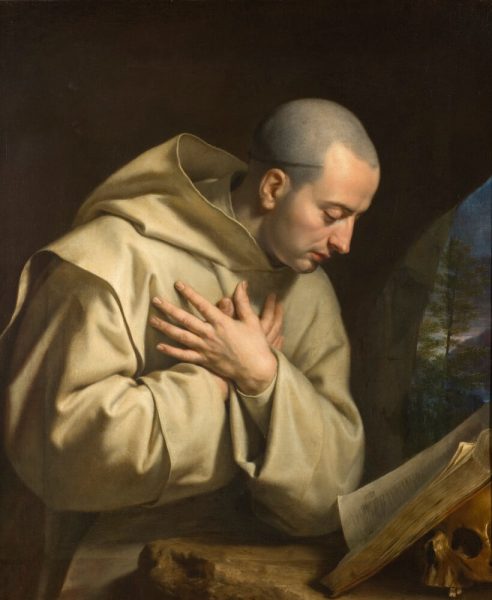
Lectio Divina means “divine reading”. It is a prayerful way of reading Scripture which seeks not merely to understand the text, but to encounter God through it. The practice developed within the monastic tradition, particularly in early Christian and medieval spirituality, where Scripture was read slowly and repeatedly, in a spirit of attentive listening rather than analysis.
At its heart, Lectio Divina is a journey from reading to reflection, from prayer to contemplation, and finally towards a practical response in daily life. It is not intended to replace biblical study, but to complement it by helping the believer to hear the Word of God personally and spiritually.
Lectio Divina has its roots in the early Church’s prayerful reading of Scripture and in Jewish traditions of meditative recitation, in which sacred texts were received through repeated hearing and remembrance. Within the Christian tradition, figures such as Gregory of Nyssa and Benedict of Nursia helped to shape this practice. It became especially important in monastic communities, where Scripture formed the daily rhythm of prayer.
Over time, Lectio Divina became particularly associated with Benedictine spirituality. In more recent times, it has experienced a renewed interest within Catholic and wider Christian spirituality as a way of slowing down and listening attentively before Scripture. Its basic insight is simple: the Bible is not merely a text to be studied, but the living Word of God to be prayed.
The first step is the slow and attentive reading of a short passage. The aim is not to read quickly or cover a large amount of text, but to notice which word, phrase or image speaks to you. For example, when reading Luke 10:38–42, the story of Mary and Martha, you might pause at Jesus’ words: “one thing is necessary”.
The second step is meditation: thoughtful reflection on the words that have caught your attention. Here you may ask: What is this text saying? What might God be saying to me through it? If the phrase “one thing is necessary” stands out, you might reflect on the distractions in your own life and ask whether you are giving Jesus your first attention.
The third step is a prayerful response. The text becomes a personal dialogue with God. You may thank God, ask for forgiveness, offer praise, or ask for the grace to live the message of the passage more faithfully. With Luke 10:38–42, you might pray: “Lord, help me to choose the better part and not to be consumed by busyness.”
The fourth step is silent resting in God’s presence. This is not something to be forced; it is more a matter of receiving than of doing. After reading and praying, the believer remains quietly before God, allowing the Word to dwell within and the encounter with God to deepen.
Psalm 23: “The Lord is my shepherd.”
- In lectio, you read the psalm slowly and notice this particular line.
- In meditatio, you reflect on what a shepherd does: guides, protects and provides.
- In oratio, you pray: “Lord, guide me when I am confused and protect me when I am afraid.”
- In contemplatio, you simply rest in the assurance that God is present with you.
John 15:4: “Abide in me, and I in you.”
You might first read the verse several times, then reflect on what it means to remain in Christ, pray for a deeper communion with him, and finally sit quietly before God, allowing the verse to become a place of prayer rather than merely a statement to analyse.
Lectio Divina works best with a short passage rather than a long chapter. It is also helpful to pray in a quiet place and without hurry, allowing the heart to become attentive. Some people use a candle, a notebook or a simple opening prayer, but these are aids rather than essentials.
It is also important to remember that Lectio Divina is not about forcing a private message out of every verse. The aim is to listen humbly and allow Scripture, received within the life of the Church, to shape the mind, heart and will over time.
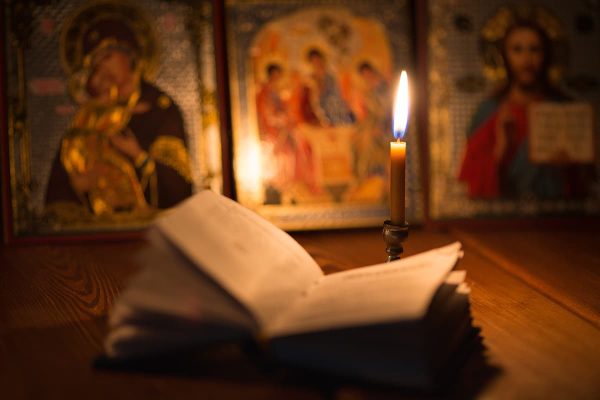
The Eastern tradition of praying with Scripture treats the Bible as a word to be received in prayer, not only studied as a text. It is closely tied to worship, silence, and the life of the Church, so reading often becomes an act of communion with God.
In this tradition, Scripture is not approached first as material for analysis, but as a living word that shapes prayer. The Psalms are especially important because they give the believer the language of praise, lament, repentance, and trust. A common pattern is to read a passage slowly, pause, and let one phrase become the centre of prayer.
Examples From The Psalms
A psalm can become prayer very naturally. For example, Psalm 51 gives voice to repentance: “Have mercy on me, O God,” so a believer can pray it when asking for forgiveness and renewal. Psalm 23 becomes a prayer of trust: “The Lord is my shepherd,” which the Christian can slowly repeat when seeking guidance and peace. Psalm 130 (“Out of the depths I cry to you”) becomes a prayer for mercy in distress.
Reading Slowly
A common pattern is to read a short passage slowly, pause, and let one phrase stay with you. A person may read, stop at one line, and then repeat it as prayer, allowing the words to shape the heart rather than just inform the mind. For instance, after reading “Hear my prayer, O Lord,” one might simply remain with that line and turn it into a personal cry to God.
Eastern prayer places great value on stillness. The aim is not to rush toward explanation, but to let the word sink into the heart so that the believer becomes attentive to God’s presence. In this sense, silence is not empty; it is a way of making room for the divine word to dwell within the person.
Example
When someone reads Psalm 46:10, “Be still, and know that I am God,” they may not rush to explain every detail right away. Instead, they sit quietly with the verse, repeat it in prayer, and let its words settle into the heart. In that stillness, the verse becomes less like information to analyze and more like a living word that awakens awareness of God’s presence.
The Jesus Prayer is one of the best-known Eastern forms of prayerful repetition: “Lord Jesus Christ, Son of God, have mercy on me, a sinner.” It helps unite mind and heart, and it can accompany Scripture reading as a way of keeping the reader focused on God’s mercy and presence. This makes Scripture reading less about speed and more about deep, repeated attention.
The repeated prayer “Lord Jesus Christ, Son of God, have mercy on me, a sinner” is not a direct Bible verse, but it is deeply rooted in Scripture, especially Luke 18:13 and Luke 18:38-39.
Eastern Christians usually read Scripture within the wider rhythm of liturgy, hymnody, and the prayers of the Church. This means Scripture is heard not as a private possession but as part of the communal voice of the Church, often together with the saints and angels. Even when read privately, it often retains this liturgical shape and ecclesial orientation.
Liturgical Readings
In the Eastern Churches, Scripture is often heard within the Divine Liturgy . For example, the Gospel reading is not treated as a private text, but as the Church’s own proclamation of Christ to the assembled faithful. When believers hear Luke 24:13-35 or John 1:1-14 in worship, they receive it as part of the Church’s living prayer, not as a stand-alone reading.
Psalms in Worship
The Psalms are another clear example. In services such as Vespers and Matins, psalm verses are chanted by the whole community, so the words become the voice of the Church. A verse like Psalm 103:1 (“Bless the Lord, O my soul”) is not just read; it is sung as communal praise.
Scripture and Hymnody
Eastern hymnody often echoes Scripture, so the Bible is heard through song as well as reading. For example, the Magnificat in Luke 1:46-55 is prayed in the Church’s worship, and hymns for feasts often expand on biblical themes such as Christ’s Nativity, Resurrection, or Transfiguration. This means Scripture is woven into the rhythm of the liturgy rather than isolated from it.
Saints and Angels
Eastern prayer also places Scripture in the company of the saints and angels. For example, Isaiah 6:1-3 and Revelation 4:8 are often linked with the heavenly worship of the Church, showing that earthly liturgy joins the praise already offered in heaven. In that sense, Scripture is heard as part of a larger cosmic chorus.
Private Reading with Liturgical Shape
Even in private devotion, Eastern Christians may still read Scripture in a liturgical way. For example, a believer might read Psalm 51, then say a short prayer of repentance, and finish with a hymn or troparion from the Church’s tradition. The reading remains shaped by the Church’s worship, even when no one else is present.
In the Eastern Christian tradition, Scripture and icons are closely related. A helpful way to say it is that Scripture proclaims with words, while icons proclaim with images.
Shared purpose
Both Scripture and icons point to the same reality: God’s saving work in Christ. Scripture tells the story in language, and the icon shows that same mystery visually, especially the Incarnation, the Transfiguration, the Resurrection, and the saints. This is why icons are often described as a kind of visual theology.
How they differ
Scripture unfolds through reading and hearing; icons work through contemplation and sight. Scripture invites the believer to listen to God’s word, while icons invite the believer to behold that word made visible in colour, form, and gesture. They are not identical, but they serve one another.
Why the relationship matters
In Orthodox thought, the icon is possible because the Word truly became flesh. If Christ can be seen in the Incarnation, then he can also be depicted. That is why icons are not treated as mere decoration: they are bound up with the Church’s confession of the Gospel.
Example
The Gospel of John 1:14 — “the Word became flesh” — gives the theological basis for icons. The same truth is expressed in another way by an icon of Christ Pantocrator: Scripture announces the Incarnation in words, and the icon witnesses to it in image.
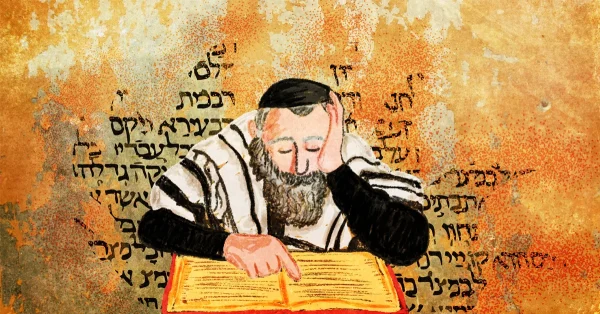
In the Jewish tradition, praying with Scripture means receiving the Bible not only as a text to be studied, but as words to be recited, sung, and lived in daily prayer. Scripture is woven into the synagogue, the home, and the rhythms of the day, so that prayer and biblical language remain closely united.
One of the clearest examples is the Shema: “Hear, O Israel: the Lord our God, the Lord is one” from Deuteronomy 6:4-9. Jews recite it daily, often in the morning and evening, as a confession of faith and a reminder to love God with the whole heart. It is not just read as a verse; it becomes a prayer of devotion, obedience, and identity.bbc.co+1
The Psalms are another major way Scripture is prayed in Judaism. They give words for praise, lament, trust, repentance, and hope, and they are used both in communal worship and personal devotion. For example, Psalm 23 can be prayed as trust in God’s care, while Psalm 51 becomes a prayer of repentance and mercy.
The Amidah is the central prayer of Jewish liturgy, and it is deeply shaped by biblical language and imagery. It includes praise of God, requests for mercy, petitions for help, and thanksgiving, drawing on Scriptural themes rather than separating prayer from the Bible. In this way, Scripture does not remain external to prayer; it forms the very vocabulary of prayer.
Jewish prayer also includes the public reading of Scripture in the synagogue. The Torah is read in a yearly cycle, with additional prophetic readings and special festival passages. This means the community does not only hear Scripture privately, but encounters it as part of worship, memory, and communal life.
A simple example would be this: a Jewish worshipper recites the Shema in the morning, prays the Amidah with its biblical language, and later reads a Psalm such as Psalm 130: “Out of the depths I cry to you, O Lord.” In each case, the words of Scripture become prayer, not just information.